
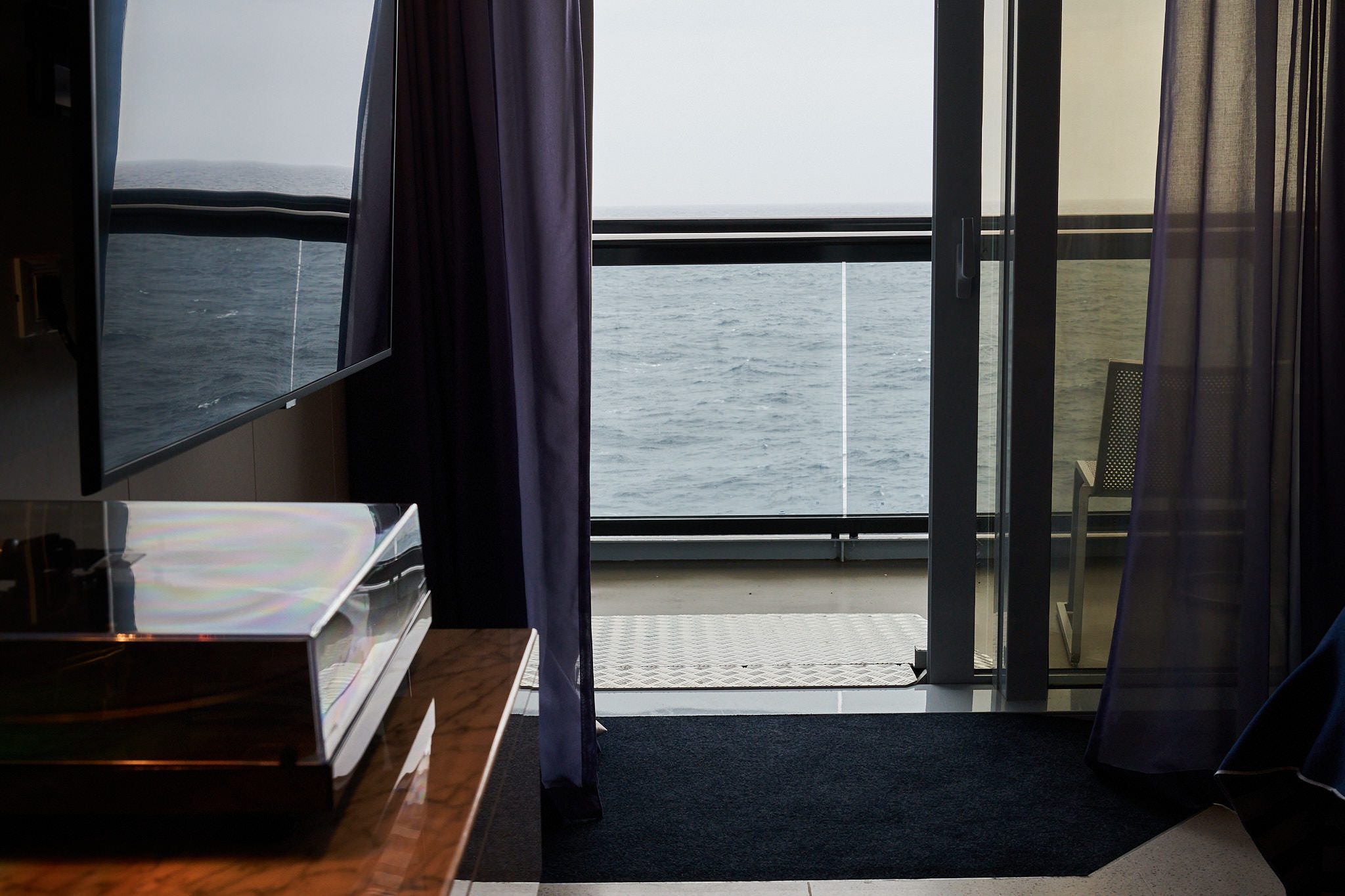
Virgin Voyages offers two kinds of accessible cabins on all four of its ships: fully accessible cabins for Sailors who use a wheelchair or scooter, and ambulatory accessible cabins for those with limited mobility who use a cane or walker. You reserve one by completing Virgin’s Accessibility and Medical Request Form, and because inventory is limited, it pays to book early.
Last updated: September 2026 · Written by the Pixie Vacations Virgin Voyages team — a Virgin Voyages Top 100 First Mate agency (no booking fees) that has sailed the fleet and books accessible cabins for Sailors with mobility needs.
Planning an accessible cruise takes more homework than a standard one, and Virgin Voyages — an adults-only, 18-and-up line — has its own rules for how accessible cabins work, how to book them, and which ports can trip you up. We book these sailings for our guests, so below is the plain-English version of everything we double-check before we ever confirm a cabin.
Fully accessible vs. ambulatory accessible cabins: what’s the difference?
This is the single most common point of confusion, and getting it wrong can mean booking the wrong room. Virgin Voyages splits its accessible cabins into two distinct types, each designed for a different level of mobility need.
| Fully accessible cabin | Ambulatory accessible cabin | |
|---|---|---|
| Who it’s for | Sailors who regularly use a wheelchair, scooter, or similar mobility device | Sailors with limited mobility who use a cane or walker but don’t need a wheelchair full-time |
| Bathroom | Roll-in shower with grab bars and a fold-down shower seat; no step into the bathroom | Grab bars to assist with balance; standard step-in layout |
| Doorways & space | Entry doorways at least 34″ (865 mm) wide; full turnaround space of at least 60″ (1525 mm) in the room and bathroom | Standard cabin footprint with added safety features |
| Best if you | Use a wheelchair or non-folding scooter and need to store it in-cabin | Can walk short distances but want extra stability and support |
According to Virgin Voyages’ accessible cabin page, fully accessible cabins include entry doorways of at least 34 inches, no step into the bathroom, at least a 60-inch turnaround in the room and bathroom, and a roll-in shower fitted with grab bars and a fold-down seat. Ambulatory cabins keep a more standard layout but add grab bars and balance-friendly features. If you use a wheelchair or a scooter that doesn’t fold, the fully accessible cabin is the one you want — it’s also where Virgin stores those devices safely.
Which ships and cabin categories have accessible cabins?
Accessible cabins are available on all four Virgin Voyages ships — Scarlet Lady, Valiant Lady, Resilient Lady, and Brilliant Lady. They’re spread across cabin categories rather than lumped into one type, so you’ll find accessible versions of interior cabins and the popular Sea Terrace (balcony) cabins, among others.
The catch: there are only a handful of accessible cabins per ship, and they book up first on popular sailings. Virgin itself recommends reserving well in advance to secure the accessible cabin with the features you need. If a specific ship, itinerary, and accessible balcony matter to you, treat “book early” as a hard rule, not a suggestion. Our Virgin Voyages cabin guide and Sea Terrace cabin breakdown walk through how the categories compare once you know which accessible type you need.
How to book an accessible cabin on Virgin Voyages
You can’t simply grab an accessible cabin the way you’d pick any other room, and you shouldn’t try to bid your way into one through an upgrade. Here’s the actual process:
- Book the eligible accessible cabin category for your sailing (this is where a First Mate helps — we confirm the right type is truly available before you commit).
- Complete Virgin’s Accessibility and Medical Request Form to acknowledge that you need the cabin’s accessibility features. Virgin sends this form once the reservation is secured if you haven’t already filled it out.
- Note your specific needs — mobility device type, embarkation assistance, dietary or medical needs — so the crew can prepare before you board.
One important rule: Virgin reserves accessible cabins for Sailors who genuinely need them. If someone books an accessible cabin without needing the features, Virgin can move them to a standard cabin at any time to free the accessible room for a Sailor with a disability. In other words, don’t book one just for the roll-in shower or extra space — and if you do need it, make sure the form is on file so your cabin is protected.
Bringing or renting a wheelchair or scooter
If you use a wheelchair or scooter regularly, Virgin asks that you bring your own or rent one from an approved vendor and have it waiting at the ship. According to Virgin Voyages’ mobility page, the two authorized rental partners are:
- Scootaround — 1-888-441-7575 (or 204-982-0657)
- Special Needs at Sea — 1-800-513-4515 (or 954-585-0575)
Both deliver mobility equipment straight to the ship. There’s a storage rule worth flagging: if your wheelchair or scooter is a non-folding, non-collapsible model, Virgin asks that you reserve a fully accessible cabin so the device can be stored safely and securely in your room rather than blocking a corridor. That’s another reason the fully accessible cabin — not the ambulatory one — is the right call for full-time wheelchair and scooter users.
Accessibility features you’ll find onboard
Beyond the cabins, Virgin Voyages builds accessibility into the public spaces. Onboard amenities and services include:
- Assistance with embarkation and disembarkation
- Pool lifts
- Accessible restrooms throughout public areas
- Accessible seating in the theater, restaurants, bars, and lounges
Because Virgin is a smaller, adults-only line with a walkable ship layout, many Sailors with limited mobility find it easier to navigate than a mega-ship. For arrival and departure logistics, our embarkation day guide and disembarkation guide explain how to arrange boarding and wheelchair assistance at the terminal.
The catch first-timers miss: tender ports
This is where an accessible cruise can go sideways, and it’s the part we plan around most carefully. At some ports, the ship can’t dock at a pier and instead anchors offshore, ferrying Sailors ashore on small boats called tenders. According to Virgin Voyages, to safely board most tenders a Sailor must be able to take steps, a non-motorized wheelchair must be collapsible, and motorized wheelchairs and mobility scooters are not permitted on tenders unless roll-on capability is available — which Virgin says cannot be guaranteed. The captain makes the final call based on conditions, and if you can’t tender ashore, there’s no refund or credit for the missed port.
Ports that require tendering include Belize City, Cabo San Lucas, Cannes, Catalina Island, George Town (Grand Cayman), Santorini, Mykonos, Kotor, and several Alaska stops like Juneau, Ketchikan, and Skagway (some vary by sailing). The workaround is simple but requires knowing it in advance: choose itineraries where the ports dock rather than tender. That single decision protects your shore days, and it’s exactly the kind of thing we check line by line before recommending a sailing. Our homeports and itineraries overview is a good starting point for narrowing down routes.
Shore excursions and accessibility
Virgin’s Shore Things (its shore excursions) vary widely in accessibility, especially at ancient sites and ports outside the United States, where facilities may not be adapted for wheelchairs or limited mobility. Virgin is upfront that it can’t guarantee every excursion is fully accessible. Before booking any excursion, confirm the specific accessibility details, and consider building in independent, accessible plans at ports where the ship’s tours won’t work for you. Our Shore Things excursions guide covers how the booking system works.
Is Virgin Voyages good for wheelchair users?
Honestly? For many Sailors, yes — the ships are modern, walkable, and genuinely stylish, and the fully accessible cabins are well designed. But it’s not the right fit for everyone. Sailors who rely on a motorized scooter and want to get off at every port can be frustrated by tender days, and the small number of accessible cabins means popular sailings sell out early. The line does best for wheelchair and limited-mobility Sailors who plan ahead, pick a dock-heavy itinerary, and get the paperwork in place early. That planning gap is precisely where a specialist advisor earns their keep — and since Virgin is adults-only (18+), you’re planning for adults, not a multi-generational group with kids in tow.
How a First Mate advisor makes an accessible booking easier
Booking Virgin Voyages through Pixie Vacations costs exactly the same as booking direct — Virgin sets the fare, and we charge no fees. What you get is a Virgin Voyages Top 100 First Mate agency that confirms the right accessible cabin type is truly available, files the Accessibility and Medical Request Form correctly, coordinates a Scootaround or Special Needs at Sea rental if you need one, and steers you toward itineraries that dock instead of tender. If accessibility is on the line, that legwork is the difference between a smooth voyage and a stressful one.
Ready to plan an accessible Virgin Voyages cruise? Browse Virgin Voyages cruises with Pixie Vacations, request a free quote, or call us at 678-815-1584. Same price as booking direct — with an advisor in your corner.
Frequently asked questions
Are there accessible cabins on Virgin Voyages?
Yes. Every Virgin Voyages ship — Scarlet Lady, Valiant Lady, Resilient Lady, and Brilliant Lady — has both fully accessible cabins (for wheelchair and scooter users) and ambulatory accessible cabins (for Sailors with limited mobility who use a cane or walker). They’re limited in number, so book early.
What is the difference between accessible and ambulatory cabins on Virgin Voyages?
Fully accessible cabins are for Sailors who regularly use a wheelchair or scooter — they have wider 34-inch doorways, a 60-inch turnaround, no step into the bathroom, and a roll-in shower with grab bars and a fold-down seat. Ambulatory accessible cabins are for Sailors with limited mobility who don’t need a wheelchair full-time and mainly add grab bars for balance.
How do I book an accessible cabin on Virgin Voyages?
Reserve the eligible accessible cabin category for your sailing, then complete Virgin’s Accessibility and Medical Request Form to confirm you need the accessibility features. A First Mate travel advisor can verify availability and file the form for you. Don’t book an accessible cabin unless you need it — Virgin can reassign it to a Sailor with a disability.
Can I bring my own scooter or wheelchair on Virgin Voyages?
Yes, you can bring your own or rent from Virgin’s approved vendors, Scootaround (1-888-441-7575) or Special Needs at Sea (1-800-513-4515), who deliver to the ship. If your device is non-folding, Virgin asks that you book a fully accessible cabin so it can be stored safely in your room.
Can wheelchair users get off the ship at every port?
Not always. At tender ports, the ship anchors offshore and small boats ferry Sailors ashore — and motorized wheelchairs and scooters generally aren’t permitted on tenders. To keep every shore day, choose an itinerary where the ports dock rather than tender, which is something we check before recommending a sailing.
Does booking with a travel agent cost more for an accessible cruise?
No. Booking Virgin Voyages through a First Mate agency like Pixie Vacations is the same price as booking direct, with no fees. The advantage is an advisor who handles the accessibility paperwork, coordinates equipment rentals, and picks accessible-friendly itineraries for you.

Ready to Book Your Virgin Voyages Cruise?
Let Pixie Vacations plan your perfect voyage — expert advice, no booking fees, and personalized service from a Virgin Voyages Top 100 First Mate.
Or call us: 678-815-1584